
Last updated October 31, 2026
 House lockouts
 Re-keying
 Deadbolt upgrades
 Smart locks
 Schlage
 Kwikset
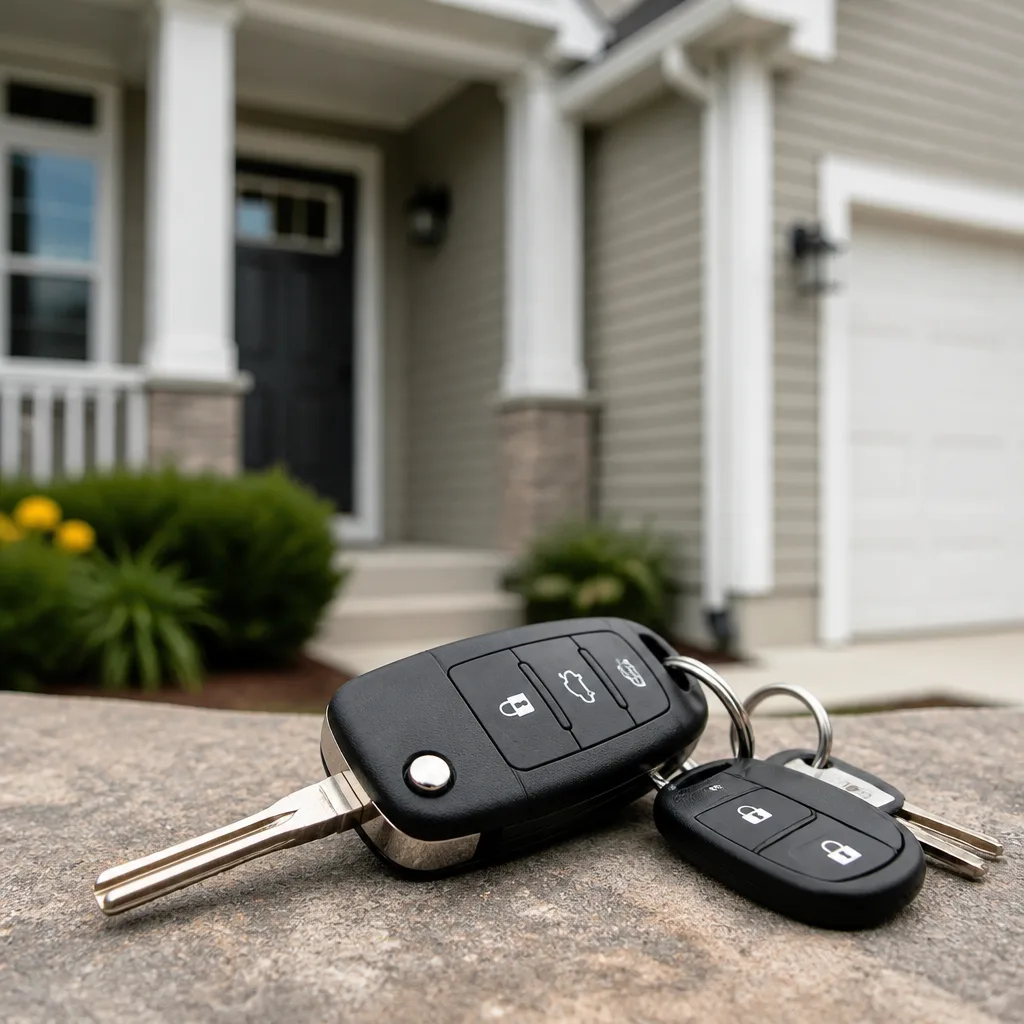 Car keys & fobs
Non-destructive entry first, always - and we re-key Schlage, Kwikset, and Baldwin locks on the spot while you watch
You get a price before we start. It does not change when we arrive. No surprises.
Get your free estimateCar Key Replacement Maintenance Checklist for Lansing Homeowners
Most Lansing drivers don’t learn their car uses a proximity smart key until they’re standing in a Meijer parking lot on a January night, holding a dead fob and realizing the physical key blade they’ve relied on for decades no longer exists. By then, the real surprise isn’t the cold. It’s the quote. Dealer programming fees, tow bills, and the discovery that a spare could have cost a third as much if made six months earlier. This guide walks through the five key technology tiers, what each actually costs to duplicate in the Lansing market, and the maintenance habits that prevent a $400 emergency from replacing a $60 proactive choice.
Quick Answer
Car key replacement in Lansing is not one service with one price. It spans roughly $5 for a basic metal blade cut to $400 plus for a proximity smart fob that requires programming to your vehicle’s immobilizer. A proactive spare made while you still have two working keys typically costs 30 – 60% less than an emergency all-keys-lost replacement, because the vehicle’s onboard computer can authorize the new key without specialized diagnostic work. The single most valuable maintenance step any Lansing homeowner can take is determining which technology tier their key belongs to before one is lost.
Styles & brands we work with
Table of Contents
- The Five Key Technology Tiers and What They Cost in Lansing
- Why Michigan Winters Kill Key Fobs Early
- Proactive Spare-Making Checklist by Vehicle Age
- The One-Key-Left Trap: Why It Costs More
- Commuter Vehicles with Known Programming Quirks
- A 15-Minute Monthly Key Maintenance Routine
- Common Mistakes to Avoid
- When to Call a Professional
- Frequently Asked Questions
The Five Key Technology Tiers and What They Cost in Lansing
Every car key falls into one of five technology categories. Knowing which tier your vehicle uses is the foundation of every smart maintenance decision that follows, as covered in our Car Key Replacement Troubleshooting: Common Problems and How to Fix Them guide. Here’s what each tier looks like, what it costs to duplicate in the Lansing market, and what you need to know before you need a replacement.
Tier 1: Basic Metal Blade
This is a plain mechanical key with no electronics. It fits older vehicles, roughly pre-1996 for most makes. Cutting a basic blade at a Lansing hardware store or locksmith shop typically runs $5 to $15 and takes under ten minutes. There are no programming steps, no diagnostic equipment, and no compatibility concerns beyond the blank being the correct shape. If this describes your car, the maintenance story is simple. Make two spares, store one at home and one with a trusted relative, and you’ll never face a serious key emergency.
Tier 2: Transponder Chip Key
Starting in the mid-1990s, manufacturers embedded a tiny RFID chip in the plastic head of the key. The vehicle won’t start unless the chip’s unique code is recognized by the immobilizer. A transponder key cut and programmed in Lansing typically runs $60 to $140 depending on the vehicle make. Programming requires a diagnostic tool that can communicate with the vehicle’s computer, but when you have two existing working keys, many vehicles support an onboard self-programming procedure that reduces labor significantly. The chip is passive. It never needs a battery and rarely fails. The failure point is almost always physical key wear or losing the key entirely.
Tier 3: Remote Head Key
This combines a transponder chip with remote lock and unlock buttons built into the key head. It’s common on mid-2000s through early-2010s Ford, GM, and Chrysler platforms. Replacement with programming in the Lansing area typically runs $150 to $250. The remote portion requires a battery, which fails every two to three years under normal use, and the transponder chip function is separate and passive. A dead remote battery doesn’t prevent the car from starting if the transponder is still recognized, but many drivers assume it’s a bigger problem than it is and call for a tow unnecessarily.
Tier 4: Proximity Smart Fob
This is the keyless entry and push-button start fob that never needs to leave your pocket or purse. The vehicle detects the fob’s presence and authorizes starting through a challenge-response exchange. Replacement fobs with programming in Lansing typically start around $250 and can reach $400 or more for European makes. These fobs contain both an active radio transmitter and a passive transponder backup, plus a hidden mechanical blade for emergency door entry. Programming requires professional-grade diagnostic equipment in nearly all cases, and many vehicles require all existing fobs to be present during the programming session.
Tier 5: Push-Start System with Smart Key Integration
Some newer vehicles integrate the smart key with a phone-as-key app or a credit-card-style transmitter rather than a traditional fob. These systems are typically found on EVs and late-model luxury vehicles. Replacement costs are the highest in the market, often $350 to $500 plus in Lansing, because the dealer or a properly equipped automotive locksmith must interface with the vehicle’s security gateway. The maintenance angle here is simple but critical: keep every authorized device accounted for, and replace a lost phone-as-key credential immediately via the app before the physical backup fob also goes missing.
In our experience at Squire Locksmith, most Lansing drivers can identify their tier in under a minute if they look at their key and ask two questions: does it have buttons, and does the car start with a push button instead of turning the key. The answer places you squarely in one tier or another, and that placement determines your spare-key economics.
Why Michigan Winters Kill Key Fobs Early
Lansing winters are hard on car batteries, but they’re just as hard on key fob batteries, and the failure mode is predictable. Lithium coin cells, the CR2032 and CR2025 batteries that power most remote head keys and proximity fobs, lose capacity in cold temperatures. A fob battery that reads 3.1 volts on a warm September afternoon can drop below the 2.6-volt threshold many vehicle modules require when the temperature falls to single digits. That’s why remote range shrinks in January before it disappears in February.
The more insidious problem is that cold-weather failures are intermittent. A fob that works in the morning after the car has been running and the cabin is warm may fail when you return to a cold-soaked vehicle in a parking structure. Intermittent failures are worse than complete failures because they erode trust in the fob without producing a clear signal that replacement is needed.
Here’s a simple test any Lansing driver can do at home:
- Stand ten feet from your locked car in a cold environment, first thing in the morning before the car has run.
- Press the unlock button while holding the fob at waist height, pointing it at the vehicle.
- If the car doesn’t respond on the first or second press, but responds when you move closer or hold the fob higher, the battery is marginal.
- Replace the coin cell immediately. It costs $2 to $5 at any Lansing auto parts store and takes under five minutes on most fobs using a small flathead screwdriver to split the case along the seam.
Proactively replacing fob batteries every 18 to 24 months, before they fail, eliminates the most common avoidable key emergency in the Lansing market. It also preserves the fob’s internal circuit board from the corrosion that can occur when a leaking coin cell sits too long.
Proactive Spare-Making Checklist by Vehicle Age
The economics of making a spare key change based on your vehicle’s age and technology tier. What makes sense for a 2011 Chevy Equinox is different from what makes sense for a 2023 Honda CR-V. Here’s the decision framework we recommend to Lansing drivers.
For Vehicles Older Than 2010
- Determine if your key is a basic blade or transponder key. Older GM and Ford trucks and SUVs from this era commonly use transponder keys.
- If you have two working keys, make a third. On many Ford and GM platforms from this generation, the vehicle supports self-programming, which means the new transponder key can be cut at a hardware store and programmed in the driveway in under ten minutes using a sequence of key turns.
- If you have only one working key, make a spare now. The cost is higher because programming requires diagnostic equipment, but it’s still far less than an all-keys-lost scenario.
- Store the spare in a consistent location at home, not in the vehicle. A spare locked in the glove box helps no one when the working key is lost in a parking lot.
For Vehicles 2010 Through 2018
- Identify whether your vehicle uses a remote head key or a proximity fob. This is the transition era when many manufacturers moved from one to the other.
- If you have two functioning remote head keys, a third costs roughly the same as a transponder key plus a remote, typically $120 to $200 in Lansing. The programming process often still supports self-programming on Ford and some GM platforms.
- If you have two functioning proximity fobs, a third is worth making if your household has two drivers sharing one vehicle. The cost range is $250 to $350, but the alternative when both fobs are lost is towing plus an all-keys-lost service call that often exceeds $400.
- If your vehicle is a push-start model and you have only one fob, make a spare immediately. This is the highest-risk position to be in, and the cost gap between one-fob programming and all-fobs-lost service is significant.
For Vehicles Newer Than 2018
- Newer push-start vehicles almost always require professional programming with dealer-level diagnostic equipment. A spare fob typically runs $300 to $450 in the Lansing market.
- Check your purchase documentation and insurance policy. Some policies include key replacement coverage that offsets the cost of a proactive spare or an emergency replacement.
- If your vehicle uses a phone-as-key feature, set up the app on every driver’s phone as a backup credential, even if only one person normally drives the car.
- Treat the physical backup fob as a scarce resource. Know where it is, and don’t carry it routinely. It’s the fallback when the phone fails.
For a deeper dive on what replacement looks like when you’re already locked out, see our guide to car key replacement in Okemos, which covers the same cost structure and service process for our neighboring community.
The One-Key-Left Trap: Why It Costs More
The most expensive phrase in automotive locksmithing is “I still have one key, so I’m fine.” One key is not fine. One key is a liability that compounds over time, and the reason is rooted in how vehicle immobilizer systems work.
When you have two working keys, many vehicles built before 2015 support an onboard programming procedure that lets the owner authorize a third key without any diagnostic equipment. The vehicle’s computer recognizes both existing keys, enters a programming mode, and accepts the new transponder’s code. The cost is essentially the key blank plus cutting and ten minutes of your time.
When you have only one working key, that self-programming path disappears. The vehicle’s security system requires an authorized diagnostic tool to enter programming mode, because the vehicle can’t verify you’re the legitimate owner through the presence of a second key alone. That means a locksmith with the right equipment, not a hardware store, and the service call cost reflects it.
When you have zero working keys, the situation escalates further. The locksmith must first gain entry, then determine the correct key blank, cut it to match the ignition or door lock, and then program it to the immobilizer while the vehicle is in a security state that may require a waiting period on some makes. On certain European platforms, the vehicle’s immobilizer will refuse programming attempts for ten to thirty minutes after an unsuccessful attempt, which turns what could be a thirty-minute job into a two-hour one.
The math for a Lansing driver with one remaining transponder key is straightforward. Making a spare now costs $80 to $140. Losing the last key and requiring all-keys-lost service typically costs $200 to $350 for the same vehicle. The $80 to $140 spent now is insurance against the $250 to $400 bill later, plus the tow, plus the time standing outside in February.
Commuter Vehicles with Known Programming Quirks
Lansing and Okemos commuters drive a predictable mix of vehicles, and several of the most common models have key programming characteristics worth knowing before you need service.
Ford F-150 (2011 – 2020): The F-150 is the most common truck on Ingham County roads, and its remote head keys are generally locksmith-friendly. Many model years support self-programming when two working keys are present. However, the all-keys-lost process on 2015 and newer models requires a ten-minute security access delay through the vehicle’s PATS system, and the key blank itself is often a high-security design that can’t be cut on older duplicating machines. These quirks make the F-150 a vehicle where proactive spare-making pays off faster than almost any other.
Chevy Equinox (2010 – 2023): The Equinox spans two key generations. Early models use a transponder key with a separate remote, while 2018 and newer models moved to a proximity fob for higher trims. The early transponder keys are straightforward and inexpensive to duplicate. The newer proximity fobs require professional programming through the vehicle’s Gateway Module, and GM’s security protocols on this platform are known among locksmiths for occasional communication timeouts during programming, which extends service time. If you have a push-start Equinox with one fob, make the spare before you need it.
Honda CR-V (2007 – 2022): Honda’s immobilizer system is generally reliable, but CR-V proximity fobs are integrated into a system that Honda calls the Smart Entry System, and it’s notoriously particular about aftermarket fob compatibility. Aftermarket fobs that work on a Ford or GM may fail authentication on a Honda. This drives up the cost of replacement because OEM or high-quality aftermarket fobs are the only reliable path. Honda also stores the key code in a way that requires the locksmith to access specific diagnostic menus, which means a generalist without Honda experience can burn significant time before getting the programming right.
For Lansing drivers with any of these vehicles, the proactive spare is the smartest maintenance step available. And if you’re already in the position of needing emergency service, our emergency locksmith service in Okemos covers the same commuter corridors and vehicle types.
A 15-Minute Monthly Key Maintenance Routine
Most key problems announce themselves quietly before they become emergencies. A short monthly check catches them early. Here’s the routine we recommend to Lansing homeowners, designed to fit into the same rhythm as checking tire pressure or wiper fluid. For more guides & resources on home and vehicle security, visit our blog.
- Test every key and fob. Walk to the car and test each working key, including the remote buttons and the push-start function if applicable. If any key requires a second button press or reduced range to work, note it and plan for a battery replacement or key inspection.
- Inspect key blades for wear. A worn key blade causes ignition cylinder wear and eventually a key that spins without engaging. Look at the cuts on the key. If they’re visibly rounded or the key feels loose in the ignition, have a new key cut from the original code rather than duplicated from the worn key, which simply copies the wear.
- Check fob battery voltage if you have a multimeter. A CR2032 reading below 2.9 volts is nearing end of life. Replace it proactively. The battery costs less than a coffee and takes minutes to swap.
- Verify the spare key’s location. Do you know where your spare is right now? If not, find it and put it in a consistent location. A spare that can’t be found is not a spare.
- Test the emergency blade in proximity fobs. Most proximity fobs contain a hidden mechanical blade for entry when the battery is dead. Practice removing it and opening the driver’s door once. In a dark parking lot at night is the wrong time to learn where the release button is.
- Record your vehicle’s key code. Many vehicles come with a small metal tag or a code card containing the mechanical key code. If you have it, photograph it and store the photo securely. This code allows a locksmith to cut a key by code, which produces a factory-fresh cut rather than duplicating a worn blade.
This routine takes fifteen minutes and costs nothing except the occasional $3 battery. It catches the two most common failure modes, battery depletion on remote fobs and blade wear on mechanical keys, before they become parking-lot emergencies.
Common Mistakes to Avoid
- Waiting until the last key is lost to make a spare. All-keys-lost service costs two to three times what a spare made proactively would have cost. The time to act is when you have two working keys, not zero.
- Duplicating a worn key instead of cutting from code. A copy of a worn key is a worn key. It transfers the wear to your ignition cylinder and shortens the life of the cylinder. If your original key is visibly worn, have a new key cut from the manufacturer’s code, which a locksmith can retrieve from the vehicle or your VIN with proof of ownership.
- Storing the spare key inside the vehicle. A spare in the glove box or center console defeats the purpose. If the vehicle is locked and the working key is unavailable, you can’t access the spare. Store it at home or with a trusted person.
- Ignoring reduced remote range. When your fob’s range drops from fifty feet to ten feet, that’s not normal aging. It’s a battery at the end of its life, and it will fail at the most inconvenient moment. Replace the battery at the first sign of reduced range.
- Assuming the dealer is the only option. Automotive locksmiths in Lansing perform key cutting and programming on most makes and models at 30 – 50% below dealer pricing, without the tow bill or the multi-day appointment wait. The equipment is the same class of diagnostic tool the dealer uses.
- Overlooking the emergency blade in a proximity fob. Every proximity fob contains a mechanical key blade for dead-battery entry. If you don’t know how to release it, you’ll be locked out of a car that has a perfectly good mechanical entry method. Practice once.
- Treating all key replacements as interchangeable. A $5 blade cut and a $400 proximity fob program are not the same service. Understanding which tier your vehicle uses before an emergency changes how you plan and how much you pay.
When to Call a Professional
Some key maintenance tasks are genuinely DIY. Replacing a fob battery, testing remote range, and locating your spare are all within reach. Others require a professional, either because the equipment cost is prohibitive or because getting it wrong causes more damage than the original problem.
Call a locksmith when you need a transponder key programmed and you don’t have two working keys, when you need a proximity fob replaced for any reason, when an all-keys-lost scenario leaves you stranded, when a key breaks in the ignition or door lock, or when a wear-related ignition problem leaves the key spinning without engaging. These situations require diagnostic tools, key-cutting equipment, and programming expertise that DIY solutions can’t match. If you’re uncertain about which tier your key belongs to or whether your situation is safe to handle yourself, a phone call is the cheapest form of insurance. Squire Locksmith home is your starting point for understanding what we cover, and we’re glad to talk through your specific vehicle before you commit to anything. Squire Locksmith offers free estimates in Lansing – call (866) 361-1189.
Frequently Asked Questions
Car key replacement in Lansing ranges from about $5 for a basic metal blade cut to $400 or more for a proximity smart fob that requires programming. Transponder chip keys typically run $60 to $140, remote head keys $150 to $250, and proximity fobs $250 to $400 depending on vehicle make and model. The exact price depends on your vehicle’s key technology tier, whether you have any working keys remaining, and whether the key can be self-programmed or requires diagnostic equipment. Call (866) 361-1189 for an exact quote on your specific vehicle – estimates are free.
Yes, but only under specific conditions. A locksmith can use the VIN to retrieve the mechanical key code and cut a key that operates the door and ignition, provided the vehicle’s locks have never been changed. The VIN does not provide the electronic programming code, so the new key or fob still requires programming to the vehicle’s immobilizer. This requires proof of ownership and typically proof of identification, plus the vehicle being present for programming. Call (866) 361-1189 and have your VIN and title or registration ready for the fastest service.
Most basic key cuts take under ten minutes, and most transponder key programming takes under forty-five minutes once the locksmith is at the vehicle. Proximity fob programming on some makes, including several Honda and late-model GM platforms, can take longer because of manufacturer security protocol delays built into the vehicle’s programming sequence. The service itself is typically completed same-day, and unlike dealer appointments, there’s no multi-day wait to get on the schedule.
At Squire Locksmith, the price we quote on the phone is the price on the invoice. We quote the full cost including parts, labor, and the service call before anyone is dispatched, and there is no additional call-out surcharge added on arrival. If we discover an unusual complication once we’re at the vehicle, we stop and explain the situation with a revised quote before proceeding, so you’re never surprised by a bill. Call (866) 361-1189 and we’ll walk through your exact vehicle and situation to give you a fixed price before we head your way.
Yes. Push-start vehicles use proximity smart fobs, and a properly equipped automotive locksmith can cut and program replacement fobs for most makes and models, including the commuter vehicles most common in Lansing. The cost is higher than a traditional key because the fob itself is more expensive and programming requires dealer-level diagnostic equipment, but the total is generally 30 – 50% below what a dealership charges for the same work. We recommend making a proactive spare if you currently have two working fobs, because the cost of an all-keys-lost replacement is significantly higher.
No. A dead battery in a remote head key or proximity fob is a $3 fix, not a replacement. The fob’s transponder chip is passive and doesn’t depend on the battery, so even with a completely dead coin cell, the vehicle should still start if you hold the fob against the start button or insert the backup key blade. Replace the CR2032 or CR2025 battery first, then test the fob before assuming anything more serious is wrong. If the fob still doesn’t work after a fresh battery, then it’s time to call a professional for diagnosis.
The Bottom Line
Car key replacement in Lansing spans a wide cost range, and the single biggest factor in where you land on that spectrum is whether you act before or after a key is lost. Proactive spare-making while you still have two working keys costs 30 – 60% less than emergency all-keys-lost service. Michigan winters accelerate fob battery failure, and a fifteen-minute monthly routine catches both battery depletion and blade wear before they strand you. Identify your key’s technology tier, make the spare while it’s cheap, and treat your last working key as the liability it is. When you need service, call (866) 361-1189 for a fixed-price quote before anyone is dispatched. For more on our full locksmith services, visit the rekey locks in Okemos page, which covers residential and commercial rekeying, or read about emergency locksmith response in Okemos for high-stakes callouts.
Written by the team at Squire Locksmith, serving Lansing since 2015.