Last updated October 31, 2026
 Smart locks
 House lockouts
 Re-keying
 Deadbolt upgrades
 Schlage
 Kwikset
 Car keys & fobs
Non-destructive entry first, always - and we re-key Schlage, Kwikset, and Baldwin locks on the spot while you watch
You get a price before we start. It does not change when we arrive. No surprises.
Get your free estimateChoosing the Right Locksmith Brand: A Buyer’s Guide for Lansing
Medeco makes an exceptional lock. It’s also unnecessary for roughly 80% of residential applications in Lansing, where the actual vulnerability is usually the door frame, not the cylinder. Spending $300 on a high-security deadbolt installed in a hollow-core door with a builder-grade strike plate is security theater, not security. This guide walks through how to match lock hardware to your actual threat model, door prep, and key control needs, so you don’t overpay for protection that doesn’t protect. We’ll cover the real differences between consumer brands like Kwikset and Schlage, the high-security tier of Medeco, Mul-T-Lock, and Abloy, and what each choice means for a Lansing home, rental, or vehicle.
Quick Answer
For most Lansing homeowners, a Grade 1 or Grade 2 Schlage deadbolt with a reinforced strike plate is the right balance of security and cost. Step up to Mul-T-Lock or Medeco only when key control matters: if you’ve distributed keys widely, own rental property, or specifically need protection against picking and bumping. Kwikset’s SmartKey system is the smart choice for renters and budget-conscious owners who may want to rekey locks themselves without calling a locksmith.
Styles & brands we work with
Table of Contents
- The Five Variables That Actually Determine the Right Lock Brand
- Brand Tiers: Honest Tradeoffs for Each Level
- The Door Prep Reality Most Guides Skip
- Key Control as a Standalone Decision
- Smart Lock Compatibility and What It Means for Cylinder Security
- What Lansing Homes Actually Need
- Common Mistakes to Avoid
- When to Call a Professional
- Frequently Asked Questions
The Five Variables That Actually Determine the Right Lock Brand
Lock manufacturers spend heavily on marketing that suggests you can rank brands on a simple good-better-best scale. That’s misleading. In our experience working with locks across Lansing and the surrounding communities, the right choice depends on five independent variables that don’t always line up neatly.
1. Attack resistance. This covers picking, bumping, and drilling. Consumer locks from Kwikset and basic Schlage lines use standard pin tumbler cylinders that a skilled picker can defeat in minutes. Bump keys work on most of them. High-security cylinders from Medeco, Mul-T-Lock, and Abloy introduce additional locking mechanisms, angled pins, sidebars, or disc detainer designs that make conventional attacks dramatically harder. But here’s the thing: most Lansing break-ins don’t involve picking. They involve a boot to the door.
2. Key control. This is about who can duplicate your keys. A standard Schlage or Kwikset key can be copied at any hardware store for a few dollars. Restricted systems require a proprietary key blank that’s only available through authorized dealers. If you’ve ever handed a key to a contractor, a dog walker, a house cleaner, or a tenant who moved out, key control is a more relevant concern than pick resistance.
3. ANSI/BHMA grade rating. The Builders Hardware Manufacturers Association tests locks on cycles, force resistance, and durability. Grade 1 is the highest (commercial-grade), Grade 2 is residential-heavy-duty, Grade 3 is basic residential. Most door knobs sold at big-box stores in Lansing are Grade 3. A Grade 1 deadbolt from a mid-range brand will outlast a Grade 3 product from a premium brand.
4. Finish durability in Michigan climate. Lansing winters bring road salt, freeze-thaw cycles, and moisture. An exterior deadbolt’s finish matters more here than it does in Phoenix. Satin nickel and oil-rubbed bronze finishes hold up well. Bright brass on an entry lock will show wear within two Michigan winters, particularly on the north-facing side of a home.
5. Smart lock integration compatibility. Some high-security cylinders accept retrofit smart lock adapters. Others don’t, which forces a full hardware replacement if you want keypad entry. We’ll dig into this in a later section because it trips up a lot of Lansing homeowners who buy premium hardware first and ask about smart features later.
These five variables rarely point in the same direction. A landlord with twelve units needs key control more than attack resistance. An East Lansing renter on the ground floor needs attack resistance more than finish durability. The brand choice follows the use case, not the other way around.
Brand Tiers: Honest Tradeoffs for Each Level
Kwikset: Convenience First
Kwikset is the most common lock brand in Lansing tract homes and rental properties. The standout feature is SmartKey, a cylinder design that lets you rekey the lock yourself in about 30 seconds using a small tool included with the kit. No locksmith, no hardware removal, no new keys. That convenience is genuinely useful if you’re a landlord who needs to reset access between tenants, or a homeowner who recently split from a roommate.
The tradeoff is pick resistance. Kwikset cylinders are pin tumbler designs with standard tolerances. They can be picked or bumped by someone with moderate skill and practice. For a ground-floor window-adjacent door, that’s a legitimate weakness. For most applications, it’s a non-issue because forced entry, not picking, is the dominant threat in Lansing.
Kwikset’s Grade 1 options exist but are less common. Most of what you’ll find on shelves is Grade 3 or light Grade 2 hardware. The brand makes sense when you want rekeying convenience at a low entry price.
Schlage: The Default Right Answer
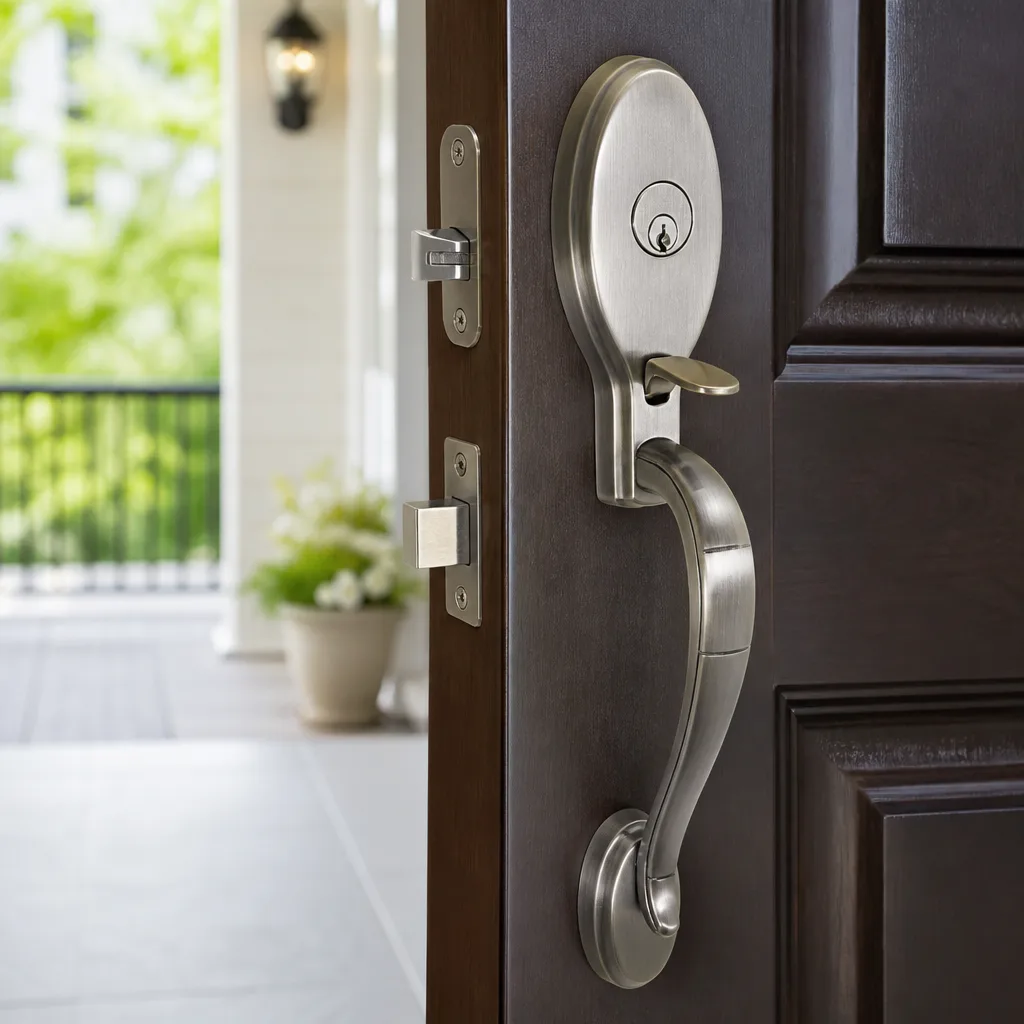
Schlage occupies the middle ground, and for most Lansing homeowners, it’s where the conversation should end. The B60 deadbolt is a Grade 1 product with a solid track record. The keyway is less forgiving than Kwikset’s, which means bumping is harder. The cylinders are pick-resistant enough that casual attacks fail. And Schlage’s product range is genuinely wide: you can get a Grade 1 deadbolt for about $40 to $60 at any hardware store in Lansing, or step up to decorative trim packages that pair with Baldwin and Yale aesthetics.
Schlage doesn’t have Kwikset’s self-rekeying trick, so rekeying means calling a locksmith or swapping the cylinder. That’s a service call cost, but it also means the rekey is done properly by someone who can inspect the hardware while they’re there. Our rekey lock services page covers how the process works and when it makes sense.
The real advantage of Schlage is that it’s a known quantity. Every locksmith in Lansing carries Schlage parts. Every door prep is compatible. Every key blank is available. If you move into a 1990s Lansing ranch house and want better security without custom door work, Schlage is the straightforward upgrade.
Mul-T-Lock: Key Control Without Full Commercial Commitment
Mul-T-Lock sits at the entry point of the high-security tier. The brand’s defining feature is its telescoping pin and sidebar mechanism, which resists picking far better than conventional pin tumblers. But the more practical benefit for most users is the key control system. Mul-T-Lock keys are cut on a patented, restricted blank. You can’t walk into a Lansing hardware store and get one duplicated. You go through an authorized dealer, show ID, and the key is cut only against your registered card.
That matters in two scenarios. First, rental property owners: when a tenant moves out, there’s no risk they have a copy floating around from a hardware store cutting machine. Second, anyone who has distributed keys to service providers, extended family, or contractors without keeping a strict count. Key control eliminates the “who has a copy?” problem.
Mul-T-Lock deadbolts typically run $120 to $240 per cylinder. Installation requires a locksmith who’s certified to order and cut the restricted blanks. The brand pairs well with Schlage trim hardware, so you can keep your existing door hardware aesthetic and upgrade the cylinder only.
Medeco: Maximum Security, Specific Use Cases
Medeco is the top of the residential high-security pyramid. The brand’s cylinders use angled cuts and rotating pins that interact with a sidebar, which makes both picking and bumping extremely difficult. Drill resistance is built into the cylinder with hardened inserts. Key duplication requires authorization through a registered dealer network, and blanks are not available outside that network.
The honest tradeoff: Medeco hardware is expensive. A single Medeco maxum deadbolt runs $200 to $300 or more depending on finish. And that cost goes into the cylinder, not the surrounding door. A Medeco deadbolt in a hollow-core door or a frame held by 1-inch screws is like putting a racing transmission in a car with bald tires. The cylinder isn’t the failure point.
Medeco makes sense for Lansing residents who have a specific, clear reason: a home business with high-value inventory, a history of attempted break-ins, a door with complete frame reinforcement already in place, or a security clearance requirement. Without that context, Medeco is overengineering, not better engineering.
Abloy: The Different Animal
Abloy cylinders work on a completely different mechanism: rotating disc detainer pins that have no conventional pin tumblers at all. There’s no attack surface for standard picking tools. Bump keys are irrelevant. The downside is that Abloy hardware and key blanks are harder to source in Lansing, and the ecosystem is smaller than Medeco’s or Mul-T-Lock’s. If you own Abloy hardware, you’re committed to a dealer relationship for every key, every cylinder, every modification. That’s the point, and it’s also the constraint.
Abloy is overkill for all but a narrow slice of residential use cases in the Lansing market. It matters more in commercial and institutional security, where the key system is deeply integrated into access control infrastructure.
The Door Prep Reality Most Guides Skip
Here’s the part that most lock brand guides get wrong: they treat the cylinder as the security system, when the cylinder is one component of a layered physical barrier. In our experience working on Lansing homes built from the 1960s through the 2000s, the most common failure points are, in order: the strike plate, the screws holding the strike plate, the door frame itself, and finally the cylinder.
Standard Lansing door prep. Most residential entry doors in Lansing tract homes are prepped for a standard 2-1/8-inch bore with a 1-inch deadbolt throw. That prep accepts cylinders from Kwikset, Schlage, Mul-T-Lock, Medeco, and most Baldwin and Yale trim hardware. Physically, any of these brands will fit in the existing hole. The compatibility problem isn’t the bore, it’s the frame.
The strike plate problem. The strike plate is the metal plate screwed into the door frame that the deadbolt throw slides into. On most Lansing homes, it’s secured by screws that are three-quarters of an inch long. Those screws bite into the door jamb trim, not the structural framing behind it. A firm kick will splinter the jamb and the door opens, regardless of whether the cylinder is Kwikset or Medeco. Upgrading to 3-inch screws that reach the stud behind the jamb costs about $10 and does more for actual security than a $200 cylinder upgrade.
The frame material issue. Many Lansing homes have wood or composite door frames. Wood frames split under force. Composite frames may not split as dramatically but will crack. The fix is a heavy-duty strike plate or a full door reinforcement kit: a wrap-around plate that strengthens the entire latch area of the frame. These kits run $30 to $80 and take a locksmith about 20 minutes to install.
If you’re considering a high-security cylinder in a Lansing home, the order of operations matters. Reinforce the frame first. Upgrade the strike plate second. Install the cylinder third. Doing it the other way around means the most expensive component protects the weakest link.
Squire Locksmith regularly evaluates door prep during rekeying services and emergency calls. If the frame isn’t up to the cylinder you’ve chosen, we’ll tell you before you spend the money. That’s part of being a locksmith who actually works on the full hardware picture, not just the part that unscrews.
Key Control as a Standalone Decision
Key control is the most underappreciated variable in residential lock selection, and it has nothing to do with how hard the cylinder is to pick. It answers a single question: who can get a working copy of your key without you knowing?
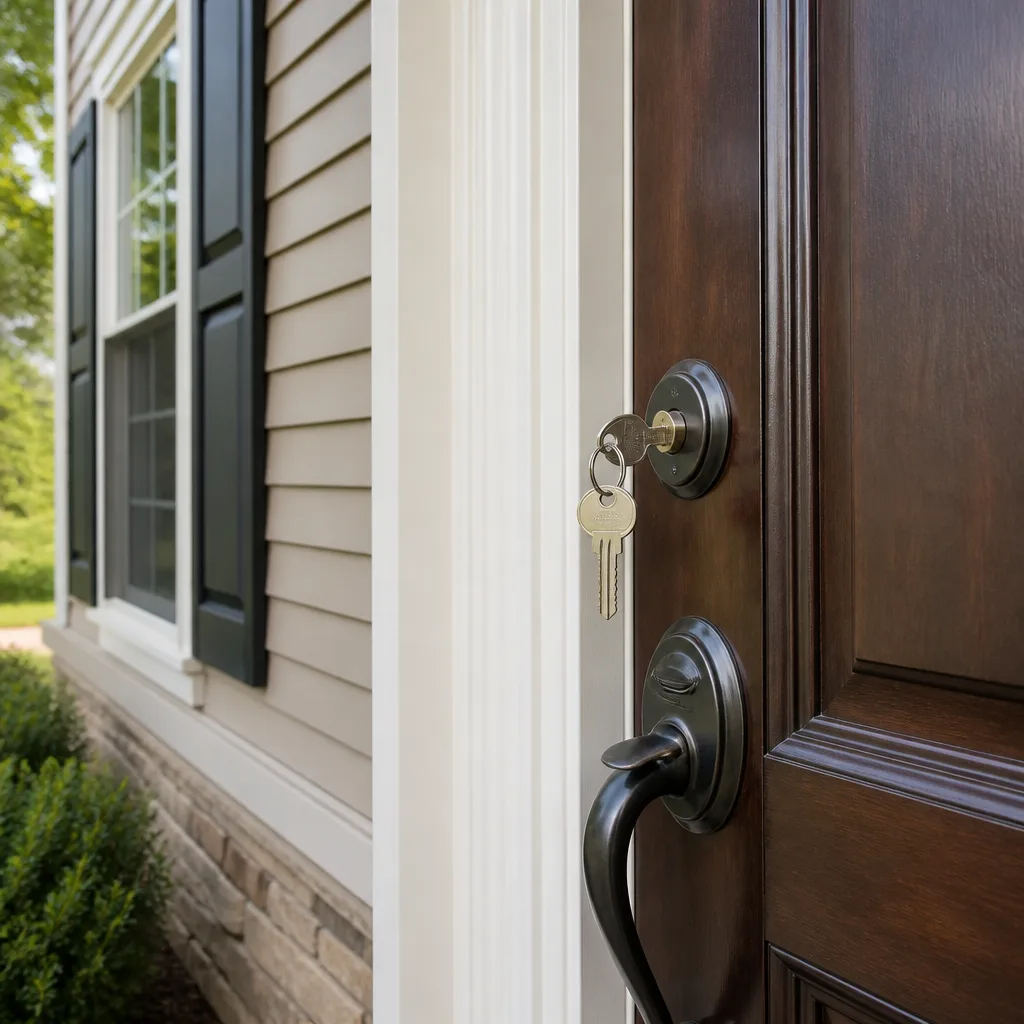
A standard Schlage or Kwikset key blank is available at every hardware store, big-box retailer, and self-service kiosk in Lansing. Anyone with physical possession of your key for 90 seconds can produce a duplicate. That’s not a problem if you keep keys on your own ring and hand them only to people you trust completely. It becomes a problem the moment you hand a key to someone whose trustworthiness is conditional: a tenant, a contractor finishing a remodel, a house cleaner you’ve decided not to use anymore, an ex-partner.
Restricted key systems solve this by controlling the blank. Mul-T-Lock, Medeco, and Abloy all operate on this principle. The key blank is patented and only distributed through authorized dealer networks. When you need a copy, you show a photo ID and a registration card. The dealer records the duplication. No hardware store can cut the key because no hardware store can buy the blank.
For a Lansing homeowner who has never distributed keys beyond immediate family, key control is not a compelling reason to spend $150 to $300 on a cylinder. For a landlord with rental properties near MSU, or a homeowner who has gone through a difficult roommate situation, it’s often the deciding factor. In those cases, the premium isn’t about attack resistance. It’s about closing the key distribution loophole.
There’s a middle path, and it’s worth stating clearly: rekeying is key control for standard hardware. When you rekey a Schlage or Kwikset lock, you change the internal pinning so the old key no longer works. The hardware stays. The access changes. Rekeying locks in Okemos and the broader Lansing area gives you the functional benefit of key control without the cost of restricted hardware. You can’t prevent a current key holder from duplicating a standard key, but you can invalidate every existing copy in a single service call. For most residential scenarios, that’s the smarter spend.
Smart Lock Compatibility and What It Means for Cylinder Security
A growing number of Lansing homeowners want keypad entry, remote access, or app-based control without giving up the physical security of a solid deadbolt. The question that comes up constantly: can I put a smart lock on my existing high-security cylinder, or do I have to choose between them?
The answer depends on the cylinder type and the smart lock product.
- Smart lock retrofit options. Several smart lock brands, including August and SwitchBot, make retrofit modules that attach to the interior side of your existing deadbolt. They turn a standard Schlage or Kwikset deadbolt into a smart lock without changing the exterior hardware or the key cylinder. This works with standard pin tumbler cylinders. It does not work with Mul-T-Lock, Medeco, or Abloy cylinders because those cylinders use non-standard tailpieces and internal mechanisms that don’t interface with retrofit adapters.
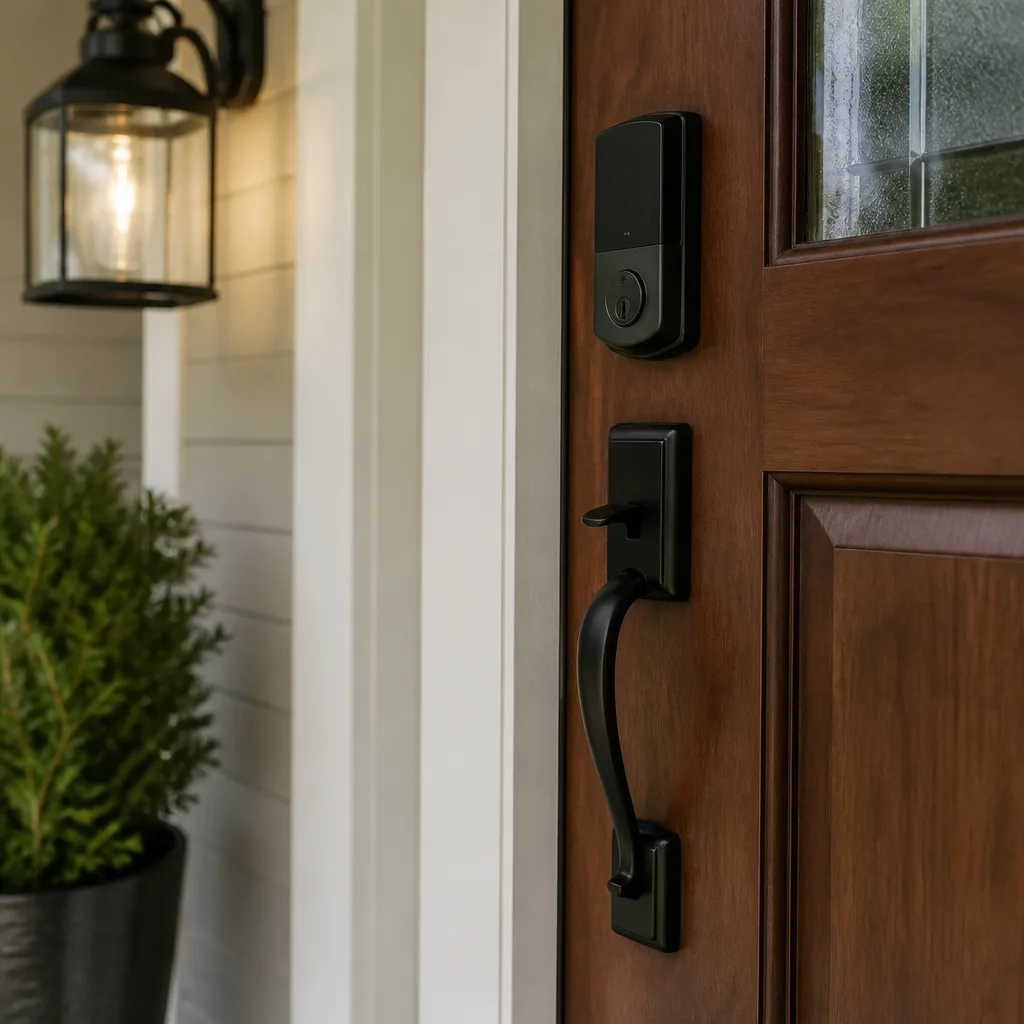
- Replacement smart deadbolts. Brands like Schlage Encode, Yale Assure, and Kwikset Halo replace the entire deadbolt assembly. You lose whatever cylinder you had before and get the smart lock’s built-in cylinder instead. Schlage Encode uses a Schlage cylinder with reasonable pick resistance. Kwikset Halo uses a SmartKey cylinder, which means you keep the self-rekeying convenience. Yale Assure pairs with conventional pin tumbler cylinders.
- The cylinder security tradeoff. If you want Medeco or Mul-T-Lock key control and smart lock convenience, you’re largely out of luck. The high-security cylinder brands have not embraced smart lock interoperability in the residential space. You either keep the high-security deadbolt and forgo smart features, or you accept a consumer-grade cylinder with smart functionality. For most Lansing homes, a Schlage Encode or a retrofit August on a solid Schlage deadbolt delivers the right balance.
There’s one more angle worth mentioning: if you’re a landlord in Lansing, smart locks change the key control calculus. A smart lock with unique codes per tenant eliminates physical key distribution entirely. You revoke access by deleting a code, not by rekeying a cylinder. In that scenario, the brand of the cylinder matters less than the reliability of the smart lock platform and your ability to manage codes remotely. That’s a real advantage for rental owners, and it’s one of the few cases where the smart lock decision overrides the cylinder decision.
What Lansing Homes Actually Need
Lansing’s housing stock is a mix: 1920s bungalows in Old Town and along Michigan Avenue, 1950s and 60s ranches in South Lansing and Colonial Village, 1990s and 2000s suburban construction in Delta Township and Holt, and apartment buildings of every era near MSU’s campus in East Lansing. Each housing type has a different practical answer to the lock brand question.
MSU-area rentals and apartments. Renters near campus have the highest key distribution churn of any population in the Lansing area. Roommates rotate yearly. Sublets happen every summer. Landlords manage turnover constantly. For this group, a Kwikset SmartKey lock is the pragmatic answer, because it allows a rekey without a service call. The tradeoff in pick resistance is irrelevant when the front door of a typical rental building is the access control point, not the unit door. For renters who want more control, asking a landlord to rekey between tenants is a reasonable security request, and our rekey services handle exactly that.
1950s-80s suburban homes. These Lansing homes typically have solid wood doors but weak strike plates and aged cylinders that have been in service for decades. The right upgrade is a Schlage B60 or equivalent Grade 1 deadbolt, paired with a reinforcement strike plate and 3-inch screws. The total spend, installed, should land under $200. Spending more on a premium cylinder doesn’t address the actual vulnerabilities.
Newer construction and custom homes. Homes built in the last 15 years in DeWitt, Okemos, and Haslett often have steel-faced doors and better frame construction. These are the homes where higher-security hardware starts to make sense, because the surrounding door can actually withstand force. If you’ve already got a solid door and a reinforced frame, a Mul-T-Lock or Medeco cylinder is no longer wasted money. It’s the next logical layer.
Bungalows and historic homes. Old Town Lansing and the neighborhoods along the Grand River have original doors that are often solid wood and irreplaceable. Owners of these homes face a dilemma: modern deadbolts require boring a larger hole, which damages an original door. The right answer is often a locksmith who understands the hardware and can source period-appropriate or minimally invasive mounting options. That’s not a brand question. It’s a craftsmanship question.
Michigan climate enters the picture too. Lansing gets freeze-thaw cycles that stress exterior locks, road salt that corrodes automotive hardware, and humidity swings that swell wood frames seasonally. A lock that works smoothly in July may bind in January if the door or frame has shifted. Part of choosing the right hardware is choosing a locksmith who understands these seasonal realities and can diagnose them during a Lansing emergency locksmith call.
Common Mistakes to Avoid
- Buying the brand before inspecting the door. A Medeco deadbolt in a door with a 3/4-inch strike plate screw is a $300 ornament. Have the door and frame evaluated first.
- Confusing key control with pick resistance. They’re different things. You might need Mul-T-Lock key control even if no one is picking locks in your Lansing neighborhood. Figure out which problem you’re solving.
- Ignoring the finish for Michigan winters. Exterior lock finishes degrade faster in Lansing than in drier climates. Choose a finish rated for exterior use and understand that bright brass shows wear in two or three seasons.
- Buying a smart lock without checking cylinder compatibility. If you already have a high-security cylinder, most smart retrofit kits won’t work. Check compatibility before you buy, or you’ll end up replacing the cylinder you paid a premium for.
- Rekeying without a plan. Rekeying is a security upgrade when it resets access after a change in who holds keys. It’s maintenance when it just swaps one set of identical access for another. Think about who should have keys after the rekey.
- Skipping the reinforcement kit. A $40 door reinforcement plate does more for forced-entry resistance in most Lansing homes than a $250 cylinder upgrade. This is the single highest-value security dollar you can spend on a door.
- Assuming a key works because it turns. In Michigan’s seasonal swings, a key that works in summer may bind in winter when the frame shifts. That’s usually a door alignment issue, not a cylinder problem, and it’s fixable without replacing the lock.
When to Call a Professional
You should call a locksmith instead of attempting a lock installation or rekey when the door prep is non-standard, when you’re working with a restricted key system, or when the lock has failed entirely and you can’t access your home. This also applies to car key replacement beyond standard transponder blanks: many newer vehicles in the Lansing area require programming equipment that isn’t available at parts stores. A locksmith with automotive key replacement capability handles this without the dealership markup. Squire Locksmith offers free estimates in Lansing. Call (866) 361-1189 and we’ll walk through what you’re working with before you spend anything.
Frequently Asked Questions
For most Lansing homes, Schlage is the best overall choice, with a Grade 1 or Grade 2 deadbolt providing strong base security at a reasonable price. If you need key control or high-security features, Mul-T-Lock or Medeco become relevant. If you want self-rekeying convenience, Kwikset SmartKey is the practical answer. The right brand depends on your door, your key distribution, and your threat model, not on a universal ranking.
Medeco locks are worth the money only if your door and frame are already reinforced and you have a specific reason to need high pick, bump, and drill resistance or tightly controlled key duplication. If you’re installing a Medeco deadbolt in a standard Lansing door frame with builder-grade screws, you’re paying for cylinder security that the frame undermines. Reinforce the door first, then decide if Medeco still makes sense.
Rekeying changes the internal pins of the existing cylinder so old keys stop working and new keys operate the same hardware. Replacing means removing the entire lock assembly and installing new hardware. Rekeying is the smarter move when the hardware is in good condition and you need to change who has access. Our rekey service in Okemos and Lansing handles both.
It depends on your cylinder type. Retrofit smart lock modules like August work with standard Schlage and Kwikset cylinders but don’t interface with Mul-T-Lock, Medeco, or Abloy mechanisms. If you have a standard cylinder, a retrofit is straightforward. If you have a high-security cylinder, you’ll need to choose between keeping it and buying a full replacement smart deadbolt.
A solid Schlage Grade 1 deadbolt runs about $40 to $60 at Lansing hardware stores, with installation by a locksmith adding $50 to $120 depending on complexity. High-security cylinders from Mul-T-Lock or Medeco run $120 to $300 or more. A door reinforcement kit with a heavy-duty strike plate adds another $30 to $80 and is often the better security investment at that price point.
Call a locksmith that handles automotive lockouts directly rather than going through a dealership. Squire Locksmith provides car key replacement and automotive locksmith service in the Okemos and Lansing areas without the dealership detour. The key consideration is whether your vehicle uses a transponder key or a proximity fob, which affects programming time and equipment.
The Bottom Line
Lock brand selection isn’t a ranking exercise. It’s a match between five variables (attack resistance, key control, grade rating, Michigan finish durability, and smart compatibility) and your actual situation. Most Lansing homeowners get the best result from a Schlage Grade 1 deadbolt with a reinforced strike plate. Renters and landlords benefit from Kwikset SmartKey’s self-rekeying. Mul-T-Lock and Medeco earn their premium when key control and cylinder-level attack resistance are genuine requirements. Abloy is for edge cases. And in every scenario, the door frame matters as much as the cylinder. Squire Locksmith works across the full hardware spectrum in Lansing, from consumer Schlage and Kwikset to high-security Mul-T-Lock, Medeco, and Abloy. For an honest assessment of what your door actually needs, call (866) 361-1189.
Written by the team at Squire Locksmith, serving Lansing since 2015.