Last updated October 31, 2026
 Smart locks
 House lockouts
 Re-keying
 Deadbolt upgrades
 Schlage
 Kwikset
 Car keys & fobs
Non-destructive entry first, always - and we re-key Schlage, Kwikset, and Baldwin locks on the spot while you watch
You get a price before we start. It does not change when we arrive. No surprises.
Get your free estimateLocksmith Cost Breakdown: The Lansing Homeowner’s Reference for 2026
Two locksmiths can both quote “rekey five locks” and be $180 apart – not because one is gouging, but because one is installing Kwikset rekeying kit cylinders and the other is sourcing Schlage C keyway cylinders with restricted key control. The quote line looks identical; the hardware is not. This guide deconstructs locksmith pricing in Lansing by hardware tier rather than by service label, so you can evaluate quotes on spec, not just total price. By the time you finish reading, you’ll know exactly what drives a locksmith invoice, where the legitimate cost variables are, and how to spot the difference between a fair price and a bait-and-switch. If you’re in Lansing and staring at a lockout or a security upgrade, this is the reference we wish every homeowner had before picking up the phone—along with our Locksmith Warning Signs: A Lansing Homeowner’s Reference Guide.
Quick Answer
Locksmith pricing in Lansing in 2026 typically falls between $75 and $450 depending on the hardware tier and service type. A basic residential rekey runs $75 – $180, a deadbolt install with mid-grade hardware lands around $150 – $280, high-security cylinder work (Medeco, Mul-T-Lock, Abloy) starts at $200 and can exceed $450, and automotive transponder keys range from $120 to $350. Emergency or after-hours calls carry a premium of $50 – $150 over standard rates. The single biggest variable isn’t labor – it’s the cylinder, keyway, and key-control technology in the hardware being serviced.
Styles & brands we work with
Table of Contents
- The Hardware Tier System: Why “Rekey My House” Has a 4x Price Range
- Anatomy of a Locksmith Invoice in Lansing
- Automotive Key Costs: Why a F-150 Key Costs 3x a Civic Key
- The Service Call Math: Cheap Trip Fees vs. Skilled Labor
- What You Can Negotiate vs. What’s Fixed Cost
- Lansing-Specific Market Factors That Shift Pricing
- Rekey as a Security Upgrade: Smart Money, Not Compromise
- Common Mistakes to Avoid
The Hardware Tier System: Why “Rekey My House” Has a 4x Price Range
Most Lansing homeowners call a locksmith and describe the job in plain English: “I need my locks rekeyed.” What they don’t realize is that sentence can describe four completely different jobs, each with its own parts cost, labor time, and skill requirement. The price difference isn’t markup – it’s the mechanical reality of what’s inside the lock. Here’s the tier breakdown as it actually plays out in Lansing homes.
Tier 1: Entry-Level Cylinder Work (Kwikset, basic Schlage)
This is the most common residential hardware in Lansing, especially in homes built before 2010. Kwikset and builder-grade Schlage locks use a standard pin-tumbler cylinder with widely available key blanks. A rekey at this tier takes 10 – 15 minutes per lock, and the parts – new pins, springs, and sometimes a fresh cylinder – cost the locksmith under $10 per lock at wholesale. In 2026, expect to pay $75 – $180 for rekeying three to five entry-level locks in Lansing, including the trip charge. The labor is straightforward, the key blanks are stocked on every service truck, and no specialized tooling is required.
Tier 2: Mid-Grade Deadbolt and Handle Replacement (Schlage B-series, Baldwin, Yale residential)
When a homeowner upgrades from builder-grade to something like a Schlage B560 or B660 deadbolt, or a Baldwin or Yale residential lockset, the parts cost jumps significantly. A Schlage B660 deadbolt retails around $90 – $140 for the hardware alone, and installation adds another $75 – $120 in labor per door. That’s why a “simple deadbolt replacement” in a Lansing home can land at $180 – $280 per door with mid-grade hardware. These locks also use a more precise pinning system, which means rekeying them later is slightly more labor-intensive. The good news: this tier is where you start getting real pick and bump resistance, and the hardware will outlast the builder-grade stuff by a decade.
Tier 3: High-Security Cylinder Work (Medeco, Mul-T-Lock, Abloy)
This is where the 4x price range becomes real. High-security cylinders from Medeco, Mul-T-Lock, and Abloy are fundamentally different machines. Medeco uses angled cuts and a sidebar mechanism; Mul-T-Lock uses a telescoping pin-in-pin design; Abloy uses rotating disc cylinders. These mechanisms resist picking, bumping, and drilling far beyond standard locks. They also carry restricted key control – meaning you can’t walk into a hardware store and have a copy made. Duplicates require a carded authorization from the locksmith who originally keyed the system. In Lansing, a Medeco or Mul-T-Lock cylinder install starts at $200 per cylinder and can exceed $450 depending on the specific model and whether it’s a rim, mortise, or key-in-knob format. The key blanks alone cost $8 – $25 each, and the specialized tooling required to service these systems is a five-figure investment for the locksmith. When you see that $450 price tag, you’re not paying for snobbery – you’re paying for access control that a $15 Kwikset cylinder simply cannot provide.
Tier 4: Smart Lock Integration
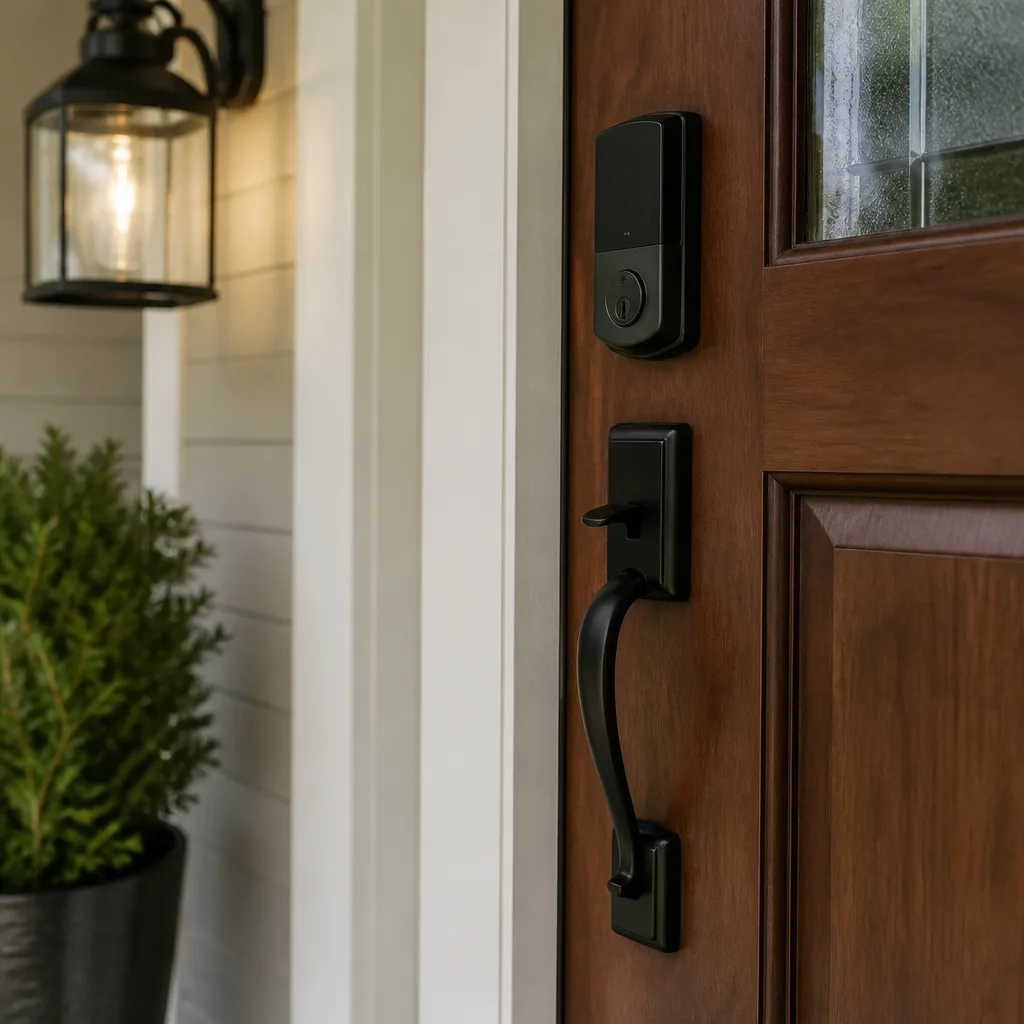
Smart locks changed the Lansing pricing conversation in the last few years. A Schlage Encode or Yale Assure lock retails between $200 and $320, and installation adds $100 – $180. But the real cost variable at this tier is integration: if you want the lock tied into an existing Z-Wave or Zigbee hub, or if the locksmith has to troubleshoot Wi-Fi signal at the door, expect the labor line to increase. In our experience, Lansing homeowners underestimate smart lock complexity – the hardware is designed for DIY, but getting it working reliably with a specific phone, hub, and router setup is where the professional time goes. Expect $300 – $500 all-in per door when integration and configuration are included.
Here’s the tiered cost table in a format you can screenshot and keep:
- Entry-level rekey (Kwikset, basic Schlage): $75 – $180 for 3 – 5 locks, parts included, 30 – 60 minutes
- Mid-grade deadbolt install (Schlage B-series, Baldwin, Yale): $180 – $280 per door, hardware and labor included
- High-security cylinder (Medeco, Mul-T-Lock, Abloy): $200 – $450+ per cylinder, key control included
- Smart lock install and integration: $300 – $500 per door, includes configuration
- Emergency lockout (non-destructive entry): $95 – $180, standard hours, no hardware needed
- Emergency lockout (after-hours): $145 – $280, includes premium
- Automotive transponder key (domestic, 2015+): $150 – $350, programming included
- Automotive basic key (non-transponder, pre-2008): $75 – $150
If you’re comparing the Squire Locksmith home approach to hardware tiering, the difference is in the range of what we service. Many Lansing locksmiths work exclusively in Tiers 1 and 2. The hardware fluency to handle Medeco, Mul-T-Lock, and Abloy cylinders – alongside the consumer-grade brands – is a different skill set, and it changes the advice you get when you call.
Anatomy of a Locksmith Invoice in Lansing
Every locksmith invoice in Lansing, regardless of company, breaks down into the same four components. Understanding them is the difference between reading a quote and evaluating it. Here’s what’s actually on the line items.
- Service call / trip charge: This covers the locksmith’s time and vehicle cost to reach your door. Standard Lansing range is $35 – $75 during business hours. It’s typically waived or rolled into the job if work is performed.
- Labor (flat-rate by service type): Locksmiths rarely bill hourly for residential work. Instead, they use flat-rate pricing by task: rekey is $20 – $30 per cylinder, deadbolt install is $75 – $120 per door, lockout entry is $75 – $150. Flat-rate protects you from slow work and the locksmith from fast work being undervalued.
- Hardware / parts: This is the fixed cost line. A Kwikset key blank costs the locksmith $1 – $3; a Medeco blank runs $8 – $25. A standard cylinder runs $5 – $15; a high-security cylinder runs $60 – $180. This line is where the tier system shows up in writing.
- Emergency / after-hours premium: Calls between 9pm and 7am, on weekends, or on holidays carry a $50 – $150 surcharge in Lansing. This isn’t price gouging – it compensates the locksmith for running a 24-hour operation and for the reality that a 2am lockout in the February cold is a more dangerous and difficult job than a Tuesday afternoon rekey.
One thing that surprises Lansing homeowners: the invoice rarely shows “labor hours.” A rekey that takes 45 minutes and a rekey that takes 90 minutes cost the same under flat-rate pricing, because the rate is set by the task, not the clock. This is good for you – it means a technician who’s careful and thorough isn’t penalizing you, and a technician who’s fast isn’t racing through your locks to pad the bill. When you’re comparing quotes, compare the line items, not the total. Two invoices can show the same $240 total with completely different value: one might be $180 of hardware with $60 of labor, the other might be $40 of hardware with $200 of labor. The first is a better deal on parts; the second is a better deal on skill.
Automotive Key Costs: Why a F-150 Key Costs 3x a Civic Key
Automotive locksmith pricing confuses more Lansing drivers than anything else in our industry. The same locksmith, the same service call, the same hour of work – and one key costs $90 while another costs $320. The answer lies in what’s inside the key and what it takes to program it.
The Transponder Divide
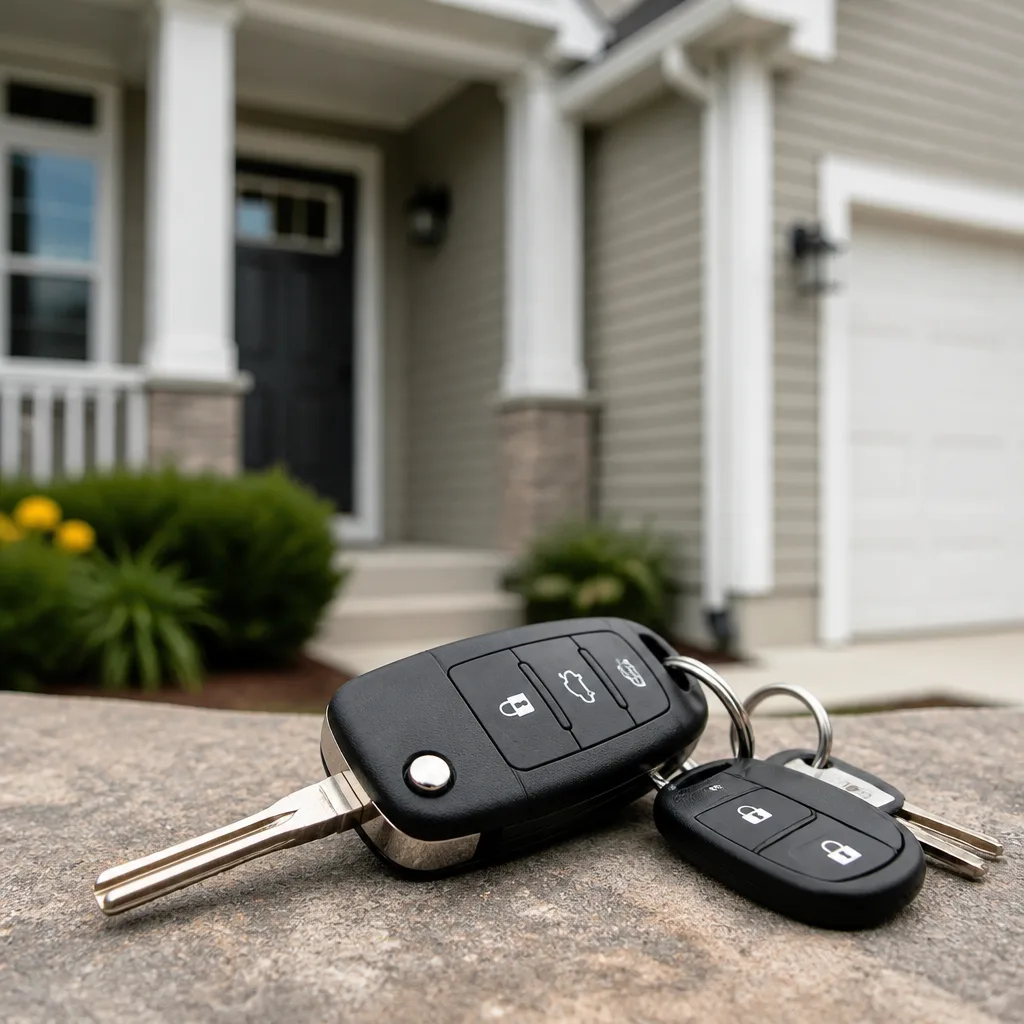
Cars built before roughly 2008 in the US market typically use a simple mechanical key. Cutting one takes two minutes and the blank costs $5 – $15. Cars built after 2008 – and many from earlier – use a transponder chip embedded in the key head that sends a unique signal to the vehicle’s immobilizer. Without the correct transponder, the key will turn the ignition but the car won’t start. The chip itself costs $15 – $40, but that’s not where the cost comes from.
Programming and Equipment Costs
The real cost driver is programming. A 2008 Honda Civic transponder key can often be cloned with a handheld device in 10 – 15 minutes. But a 2019 Ford F-150 key uses a more advanced rolling-code transponder that requires a specific programmer – often a $3,000 – $6,000 piece of equipment with annual software licensing fees. That Ford key also needs to be programmed through the vehicle’s On-Board Diagnostic (OBD) port, which takes 20 – 40 minutes and requires the locksmith to maintain current software subscriptions for Ford’s protocol. You’re paying for the amortized cost of specialized equipment and the continuous training to stay current with vehicle security systems.
What to Expect to Pay in Lansing
- Pre-2008 mechanical key (Civic, Accord, Corolla, domestic trucks): $75 – $150, cut on-site, no programming
- 2008 – 2015 transponder key (most domestic and Asian vehicles): $120 – $220, includes cloning or OBD programming
- 2016+ proximity / smart key (push-to-start vehicles): $200 – $350, includes key fob, programming, and system sync
- High-security makes (later-model German vehicles, some Lexus): $250 – $400, requires dealer-level programming access
If you’re in a lockout with your keys in the car, the automotive locksmith is often the cheaper and faster option compared to a tow to the dealership – and a dealership won’t come to you at 10pm. Our Car Key Replacement in Okemos service page covers the specifics of automotive key work in the greater Lansing area, and the same pricing logic applies across the region. The key takeaway: when you get an automotive key quote, ask what kind of key your vehicle uses and whether programming is included. That’s the line that moves the price.
The Service Call Math: Cheap Trip Fees vs. Skilled Labor
There’s a pricing pattern in the locksmith industry that savvy Lansing homeowners learn to spot, as detailed in our Locksmith Emergency Preparedness Guide for Lansing Homes. The pattern starts with a suspiciously low service call fee – sometimes as low as $19 or $29 – and ends with a lock drilling job that costs $300 – $500 when a skilled picker would have opened the same lock non-destructively in five minutes for a $95 – $150 service call.
The $39 Locksmith is the Most Expensive Locksmith
Here’s the mechanism. A company advertises a low trip fee to get a technician to your door. Once on site, the technician assesses the lock and determines that it “can’t be picked” or that “drilling is the only option.” The drill destroys the cylinder, and then you’re paying for:
- The drilling labor: $75 – $150
- A replacement cylinder: $30 – $60
- Installation of the new cylinder: $50 – $100
- New keys: $10 – $20
That $39 service call is now a $250 – $350 invoice, and you’re left with a new cylinder that’s often lower quality than the one that was destroyed. The alternative – a locksmith who charges a realistic $75 – $95 trip fee and carries the skill to pick or bypass most residential locks non-destructively – leaves you with your original hardware intact and a total bill of $95 – $180. The more expensive service call is the cheaper overall job.
What Picking Skill Actually Looks Like
Non-destructive entry isn’t magic. It’s a combination of training, practice, and carrying the right tools: picks, bypass tools, air wedges, and under-door tools for specific lock types. A locksmith who invests in this equipment and skill set can open most Kwikset, Schlage, and Yale residential locks without damage in under 10 minutes. A locksmith who doesn’t have the skill reaches for the drill because it’s faster for them – and more expensive for you.
How to Protect Yourself in Lansing
When you call a locksmith and they quote a trip fee under $50, ask one question before they arrive: “Will you attempt non-destructive entry first, and what’s your total price if you do have to drill?” If they can’t answer that question directly, or if the answer is vague, you’re looking at a potential bait-and-switch. A professional will tell you the full price range before they dispatch. If you’re in a lockout right now, our Emergency Locksmith in Okemos page walks through exactly how our emergency response works – and the same honesty standard applies in Lansing.
What You Can Negotiate vs. What’s Fixed Cost
Locksmith pricing isn’t a monolith. Some parts of a quote are genuinely negotiable, and some are fixed costs that no legitimately operating locksmith in Lansing can move. Knowing the difference saves you money without making you a difficult customer – and prevents you from pushing on the wrong line item until the locksmith walks away.
Fixed Costs: Don’t Waste Your Breath
- Hardware and parts: A Medeco cylinder costs what it costs. The locksmith paid a wholesale price, and the markup covers the cost of stocking and the reality that some parts sit on a shelf for months before being sold. You can’t negotiate the wholesale market.
- Key blanks for high-security systems: Mul-T-Lock and Abloy key blanks are sold through authorized channels with fixed pricing. There’s no discount code.
- Programming and software licensing fees: Automotive equipment requires annual fees. This cost is real and non-negotiable.
- Insurance, licensing, and operating costs: A legitimate locksmith in Lansing carries liability insurance and maintains equipment. This shows up in every price.
Negotiable Items: Where There’s Genuine Flexibility
- Multi-lock discounts on rekeying: If you’re rekeying six locks, the per-lock labor rate should drop. The trip charge is spread across more work, and the locksmith is more efficient per lock.
- Bundled services: Rekeying plus new deadbolt installation in the same visit should carry a small discount – the trip charge is already covered.
- Standard-hours scheduling: If you can wait for a weekday appointment instead of calling on a weekend, you avoid the after-hours premium entirely. That’s a 25 – 40% savings with no negotiation required.
- Labor on larger jobs: A full home security assessment with multiple upgrades has more labor flexibility than a single rekey. The locksmith would rather book the larger job.
- Additional keys cut during the same visit: The marginal cost of cutting extra keys while the locksmith is already on site is low. Ask for a discounted rate on duplicates.
About Supplying Your Own Hardware
Some Lansing homeowners buy locks from a big-box store and then call a locksmith to install them. This can work – but it carries risks you should know about. The locksmith’s warranty typically doesn’t cover hardware they didn’t supply. If that big-box Schlage arrives with a defective tailpiece or a mis-machined cylinder, you’re paying labor twice. Also, if you buy high-security hardware online – a Medeco cylinder from an unauthorized reseller, for example – you may end up with a product that can’t be serviced, because the key blanks and pinning kits are restricted to authorized dealers. Our Rekey Locks in Okemos page explains why professional-sourced hardware matters, especially with key-control systems. If you’re set on buying your own, stick to standard consumer brands and verify the locksmith will install customer-supplied hardware before you buy.
Lansing-Specific Market Factors That Shift Pricing
Locksmith pricing isn’t uniform across Michigan, and Locksmith Permits, Codes & Inspections in MI: What You Need to Know can affect what you pay. The Lansing market has specific characteristics that influence what you’ll pay, and understanding them helps you calibrate your expectations.
Climate and Hardware Wear
Lansing winters are hard on locks. The freeze-thaw cycle works water into lock cylinders, and when that water freezes, it expands – damaging pins, springs, and lubricant coatings. Locks in Lansing homes tend to need service more frequently than locks in, say, Phoenix or San Diego. A locksmith in this market sees more seized cylinders, more broken keys snapped off in frozen locks, and more weather-damaged hardware. That reality shows up in two ways: first, replacement is sometimes genuinely necessary rather than optional, and second, a Lansing locksmith is more likely to stock weather-resistant lubricants and know which hardware survives Michigan winters. A knowledgeable tech will recommend graphite-based or dry-film lubricants over oil-based products that gum up in cold weather – a small detail that extends the life of your locks significantly.
Housing Stock and Hardware Mix
Lansing’s housing stock spans a wide range: early-20th-century bungalows on the east side, mid-century ranches in the south end, newer construction in Delta Township and the surrounding suburbs. Each era came with different standard hardware. Pre-war bungalows often have mortise locks that require different tooling and parts than the tubular locksets found in 1980s construction. Newer homes sometimes have smart locks installed by the builder. When a Lansing locksmith gives you a quote, part of what you’re paying for is the certainty that they carry parts for your specific lock type – and not every locksmith does. A tech who can service a 1920s mortise lock is less common than one who only handles modern tubular hardware.
Local Competition and Rate Normalization
Lansing sits between two larger markets – Detroit and Grand Rapids – but the pricing doesn’t simply average out. Local competition among locksmiths, combined with the economic profile of the area, keeps residential service call fees in the $35 – $75 range, slightly below the Detroit metro average. The flip side is that fewer Lansing locksmiths carry the high-security and automotive equipment found in larger markets, so those specialized services can cost slightly more as a percentage – you’re paying for the rarity of the capability as much as for the parts.
Rekey as a Security Upgrade: Smart Money, Not Compromise
There’s a persistent misconception that rekeying is the cheap alternative to replacing locks – the thing you do when you can’t afford “real” security. That framing is exactly backwards. Rekey, don’t replace is the smart security move in most situations, not the budget compromise.
What Rekeying Actually Does
When a locksmith rekeys a lock, they disassemble the cylinder, replace the internal pins and springs with a new configuration, and cut new keys to match. The old keys stop working. The new keys work. The lock’s exterior hardware – the bolt, the housing, the strike – remains unchanged. What changes is the access control: who holds a working key. For a homeowner who just bought a house, fired a contractor, or went through a roommate change, this is the security outcome that matters. The previous key holder is locked out completely. No lock replacement achieves a better result; it just costs more.
When Replacement Makes More Sense
There are times when replacement is the right call: when the existing hardware is physically worn or damaged, when the homeowner wants to upgrade from a builder-grade lock to something with better pick and bump resistance, or when moving from a standard cylinder to a high-security keyway with restricted key control. A Baldwin or Yale upgrade isn’t about replacing worn hardware – it’s about moving to a higher tier of access control. But if the existing hardware is solid, rekeying is a complete security reset at a fraction of the cost. It’s not the budget option. It’s the conceptually correct option.
From Schlage to Medeco – we know your lock. That’s the framing that matters here. The right service is determined by the hardware and the access control needs, not by what’s cheapest or what sounds most impressive. Trusted with your access, the job is to tell you the difference honestly.
Common Mistakes to Avoid
- Chasing the lowest service call fee. A $19 trip fee is a marketing tactic, not a bargain. The technician who shows up for $19 is incentivized to find or create additional work, often by drilling a lock that could have been picked. Ask for the full price before dispatch, not the teaser rate.
- Comparing total price without comparing hardware. Two $240 quotes for “rekeying” are not the same job if one is installing Kwikset kit cylinders and the other is pinning Schlage C keyway cylinders. Ask what specific hardware and keyways are included in the quote.
- Assuming all locksmiths service all brands. Most Lansing locksmiths work exclusively in consumer-grade hardware. If you have a Medeco, Mul-T-Lock, or Abloy cylinder, or a Baldwin mortise lock from a pre-war home, verify the locksmith carries the specific tooling and key blanks before they arrive.
- Buying high-security hardware from non-authorized sources. Medeco and Mul-T-Lock key blanks and pinning kits are restricted to authorized dealers. If you buy a cylinder from an online marketplace, you may own a lock that no legitimate locksmith can service or duplicate keys for.
- Waiting until a lockout to find a locksmith. The worst time to evaluate a locksmith is when you’re standing outside your house at midnight in a Lansing February. Save the number of a locksmith you trust before you need it, so the emergency call goes to a known quantity instead of whoever Google shows first.
- Declining rekeying after a key is lost. If a key is lost or stolen, rekeying the affected locks closes the access gap. Replacing the lost key alone leaves the old key in circulation. This is a security decision, not a cost decision.
- Not asking about the total price before work starts. A professional locksmith in Lansing quotes the full price on the phone before anyone is dispatched, and that is the price on the invoice. No surprise line items on arrival. If a locksmith won’t commit to a full price up front, call someone else.
When to Call a Professional
Some locksmith work is genuinely DIY-appropriate; most is not. You can replace a door knob with a screwdriver and 20 minutes. You should not attempt to rekey a high-security cylinder, service a Medeco or Mul-T-Lock system, program an automotive transponder key, or pick a lock you’re locked out of. The risk isn’t just inconvenience – it’s a drilled-out deadbolt, a damaged ignition cylinder, or a voided warranty on premium hardware. If you’re dealing with a lockout, a lost transponder key, high-security hardware, or a multi-lock rekey, the professional call is the cheaper call. Squire Locksmith offers free estimates in Lansing – call (866) 361-1189 for an honest quote before you make any decisions. Full price quoted on the phone, and that’s the price on the invoice.
Frequently Asked Questions
A standard residential locksmith visit in Lansing in 2026 costs between $75 and $450, with most common jobs – rekeys, lockouts, deadbolt installs – landing between $95 and $280. The variance is driven almost entirely by hardware tier: entry-level Kwikset work sits at the low end, high-security Medeco or Mul-T-Lock work at the high end. Call (866) 361-1189 for an exact quote on your specific job, and you’ll get the full price on the phone before anyone is dispatched.
With a reputable locksmith, yes. The full price is quoted on the phone before anyone is dispatched, and it is the price on the invoice. No call-out surcharge is added on arrival, and no line items appear that weren’t discussed. If a locksmith won’t commit to a full price up front, treat that as a red flag and call a different company.
Rekeying replaces only the internal pins and springs in the cylinder – the parts that determine which key operates the lock – while leaving the external hardware in place. Parts cost is typically under $10 per lock at wholesale, and labor is 10 – 15 minutes per cylinder. Replacement involves the full cost of new hardware plus installation. When the existing hardware is in good condition, rekeying delivers a complete security reset at a fraction of the cost. It’s not a budget compromise; it’s the conceptually correct security move.
Yes – and in most cases, a mobile automotive locksmith can do it without a tow to the dealership. The locksmith cuts the mechanical key by code or by impressioning, then programs the transponder or proximity chip using specialized equipment. The cost depends on the vehicle’s year and security system: expect $75 – $150 for pre-2008 mechanical keys, $120 – $220 for 2008 – 2015 transponder keys, and $200 – $350 for 2016+ proximity keys. Call (866) 361-1189 for a specific quote on your vehicle.
Emergency locksmith response in Lansing is typically 30 – 60 minutes for standard-hours calls, with after-hours response running longer depending on the technician’s location and current call load. Emergency response is a named core service for Squire Locksmith – not an add-on – and the after-hours premium is quoted up front when you call. If you’re locked out right now, call (866) 361-1189 and we’ll give you an exact ETA and a firm total price before the technician heads your way.
Not necessarily – but you do need to verify capability before booking. Medeco, Mul-T-Lock, and Abloy cylinders require specialized pinning kits, tooling, and authorized access to restricted key blanks. Many locksmiths don’t carry this equipment. Squire Locksmith is certified to work on 8 major lock brands including Medeco, Mul-T-Lock, Abloy, and Sargent, so high-security hardware is handled in-house rather than referred out. If you’re calling another company for high-security work, ask directly: “Do you stock Medeco pinning kits and key blanks?”
The Bottom Line
Locksmith pricing in Lansing is opaque because the same job description can span a 4x price range depending on the hardware involved. The path through that opacity is simple: evaluate quotes by spec, not by total. Know what tier of hardware you have. Ask what’s on the invoice – labor, parts, trip charge, after-hours premium. Verify the locksmith’s brand capability before they arrive. And remember the $39 service call rule: the cheapest trip fee is often the most expensive invoice. High-security hardware, handled right, is worth fair money. On call when it matters, the right Lansing locksmith gives you the full price before dispatch, and that’s the price you pay. Call (866) 361-1189 for a free estimate, and you’ll know exactly what the job costs before anyone gets in a truck. For ongoing tips, explore more guides & resources from our team.
Written by the team at Squire Locksmith, serving Lansing since 2015.